
Documents
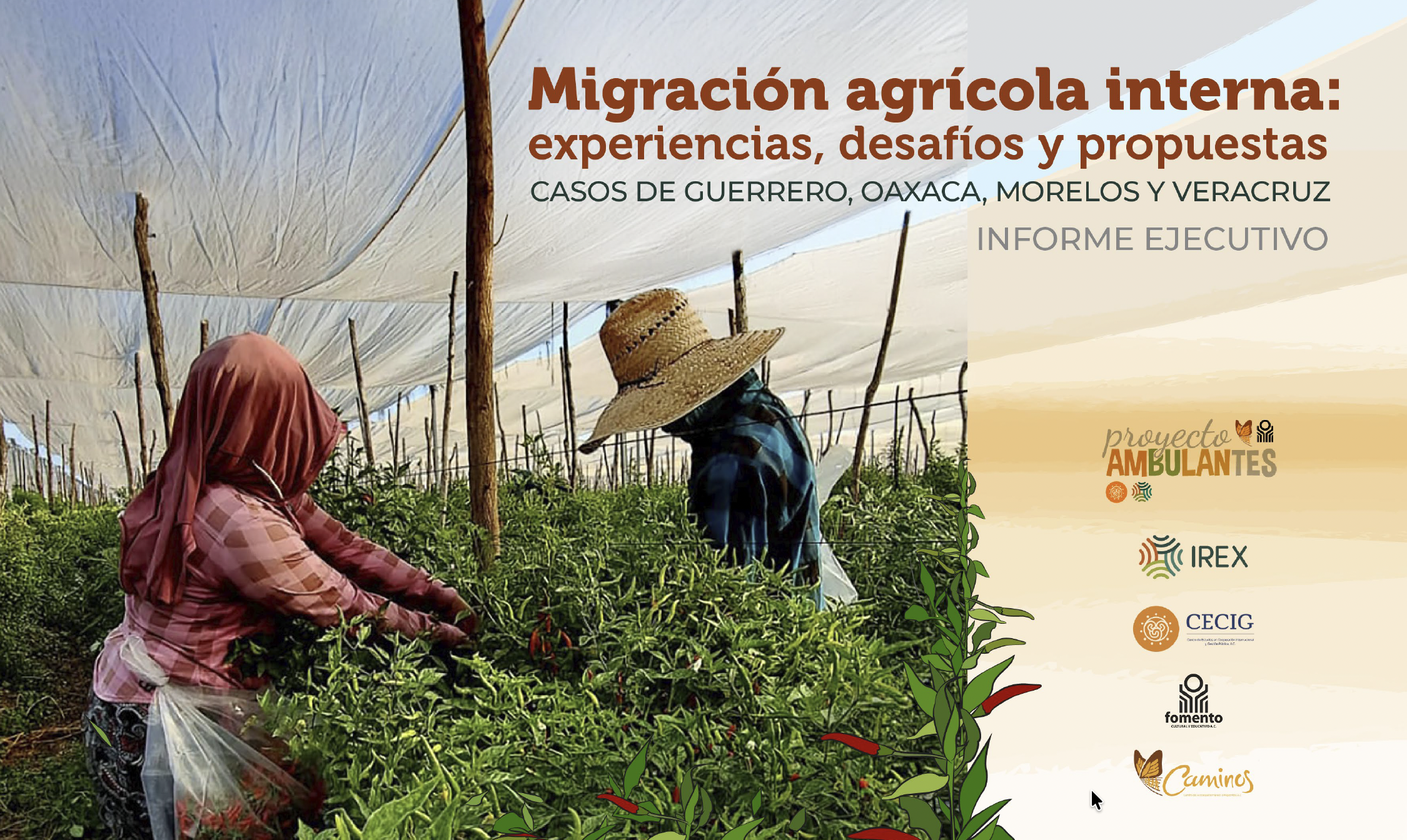
Ambulantes Executive Summary 2025
Agricultural migrant workers make a significant portion of Mexico’s food production possible. However, their living and working conditions continue to be marked by inequality, discrimination, and multiple barriers to accessing their rights and justice.
This report compiles findings from participatory research conducted by the Ambulantes Project during its Phase II in the communities of origin of agricultural migrant workers in the states of Guerrero, Oaxaca, Veracruz, and Morelos. Based on the issues identified by the communities themselves and the strategies they have developed to address them, this document aims to provide insights into the conditions faced by internal agricultural migrants, as well as to highlight demands and alternatives aimed at building more dignified living conditions.
Ambulantes Fact Sheet
Below, you can learn more about Project Ambulantes through documentation detailing the work performed and the results obtained to date.
We make these materials available in order to share knowledge and tools with public and private organizations and institutions that make efforts to promote safe domestic migration and better working and living conditions in different destinations.

Supporting Safer Migration for Internal Agricultural Laborers in Mexico - Gap Analysis
Domestic agricultural laborers are employed in both export-oriented sectors and agriculture for domestic consumption. The majority of these workers in Mexico come from the southern states (e.g. Guerrero, Oaxaca, Veracruz) and migrate to the central and northern regions of the country (e.g. Sinaloa, Baja California, Baja California Sur, Sonora, Guanajuato, San Luis Potosí). Migration routes are defined by a variety of factors such as: crop type, gender, physical ability, community of origin, and even family traditions, resulting in an innumerable range of potential routes.